


Gum disease can develop with few obvious symptoms, so the absence of pain does not tell you whether your gums are healthy. A dental exam can uncover changes that are difficult to see at home, including deeper pockets, bleeding during probing, gum recession, or bone loss.
A deep cleaning, also called scaling and root planing, removes plaque and tartar from areas a regular toothbrush cannot reach and smooths the root surfaces to support healing. If your exam findings suggest deeper gum concerns, your dentist can explain whether scaling and root planing is appropriate. For a basic explanation of the procedure, see Upper Gage’s dental scaling guide.
When a Regular Cleaning May Not Be Enough
A regular cleaning removes plaque and tartar from accessible tooth surfaces and helps manage early gum inflammation. It may be enough when gum disease has not affected the structures below the gum line.
Scaling and root planing may be discussed when pockets are deeper or when buildup and inflammation are harder to manage with a routine cleaning. The goal is to match treatment to what your exam shows, not recommend a deep cleaning for every case.
A toothbrush cannot remove hardened tartar below the gum line, and standard cleaning instruments may not reach it. That is why some patients need scaling and root planing as a separate treatment.
Signs It’s Worth Booking a Gum Checkup
Symptoms can point to gum inflammation, but they cannot tell you by themselves whether scaling and root planing is needed. It is worth booking a checkup if you notice:
- Gums that bleed while you brush or floss
- Redness, swelling, or tenderness along the gum line
- Bad breath or a bad taste that persists
- Teeth that look longer as the gums recede
- A permanent tooth that feels loose
Some people have few obvious symptoms, so feeling fine does not rule out gum disease. If you are unsure what you are seeing, comparing your gums with healthy gums can provide a reference point, but only an exam can determine what treatment you need.
What Your Gum Measurements Mean
During a comprehensive exam, your dentist or hygienist uses a periodontal probe to measure the space between each tooth and its surrounding gum tissue. Healthy pockets are often about 1 to 3 millimetres. Your dentist also considers bleeding during probing, gum recession, tartar below the gum line, changes in attachment, and bone levels.
- Pocket depths of 4 mm or more, considered alongside other findings
- Bleeding when the gums are gently probed
- Gum recession or exposed root surfaces
- Bone loss visible on X-rays
These findings do not automatically mean you need scaling and root planing. They help your dentist identify areas that need closer attention and decide whether a regular cleaning, periodontal treatment, or another approach is appropriate.
When clinically appropriate, X-rays can help assess the bone supporting each tooth alongside the exam and probing.
Questions to Ask at Your Appointment
If your hygienist discusses scaling and root planing, a few focused questions can help you understand the recommendation:
- What are my pocket measurements?
- Did you find bleeding, gum recession, or bone loss?
- Is a regular cleaning enough, or do I need scaling and root planing?
- How will we check whether my gums are healing?
What Scaling and Root Planing May Involve
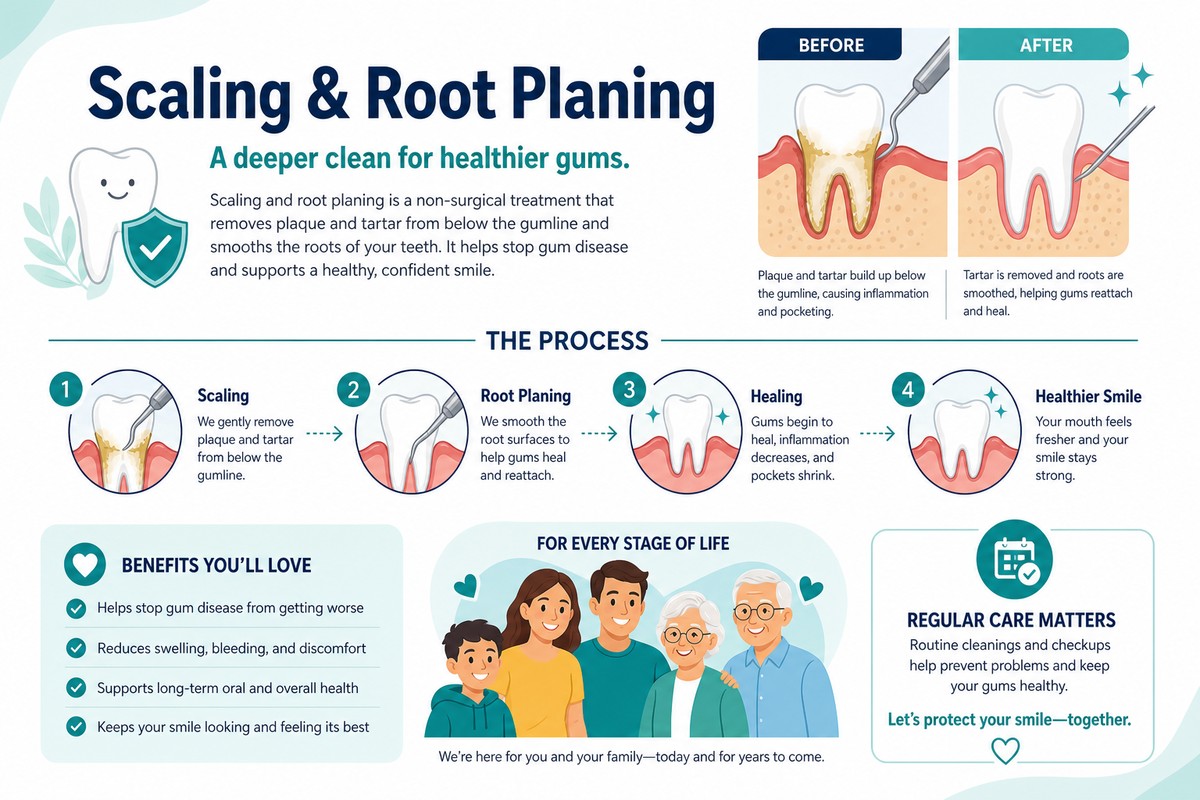
Scaling uses ultrasonic and hand instruments to remove plaque and tartar from above and below the gum line. Root planing smooths rough root surfaces and can help the gums heal more closely around the teeth.
Treatment may take more than one visit. Local anesthetic may be used to keep the area comfortable, and the clinic can explain the number and length of appointments after your exam.
What to Expect After Treatment
Some soreness and sensitivity can occur after treatment, and the gums may take time to settle. Follow the clinic’s aftercare instructions for cleaning, rinsing, eating, and tobacco use.
While your gums settle, you may find it helpful to:
- Choose softer foods for the first day or two if your gums feel tender
- Brush gently around the treated areas
- Avoid tobacco while your gums heal, since smoking can slow healing and raise the risk of further gum problems
- Follow your clinic’s aftercare instructions
- Attend your follow-up so your dentist can reassess the treated areas
At follow-up, your hygienist may repeat the pocket measurements and review how your gums responded. Staying on top of daily flossing and brushing helps protect the results.
Periodontal Maintenance and Home Care
If you have periodontitis or ongoing gum concerns, your hygienist may recommend periodontal maintenance visits more often than the usual six-month schedule. Some patients may be seen every three to six months, depending on their gum health and response to treatment.
These follow-ups help monitor your gums and remove new buildup before it contributes to recurring problems.
Between visits, brush twice a day, clean between your teeth daily, and ask your hygienist to review your technique. Angle your brush at 45 degrees toward the gum line, where plaque tends to gather.
Know What Your Exam Shows
Persistent bleeding, changes in gum shape, or a loose tooth are reasons to book an exam, but they do not determine the treatment by themselves. A dental assessment can show whether you need a regular cleaning, scaling and root planing, or another form of periodontal care.
At Upper Gage Dental Centre, our team can explain your measurements and next steps before recommending care. Book your appointment at our Hamilton office to start with an exam.