


Scaling is one of those dental terms that sounds a bit more intense than it actually is. You’ve probably heard your dentist mention it at a checkup, especially if it’s been a while since your last visit.
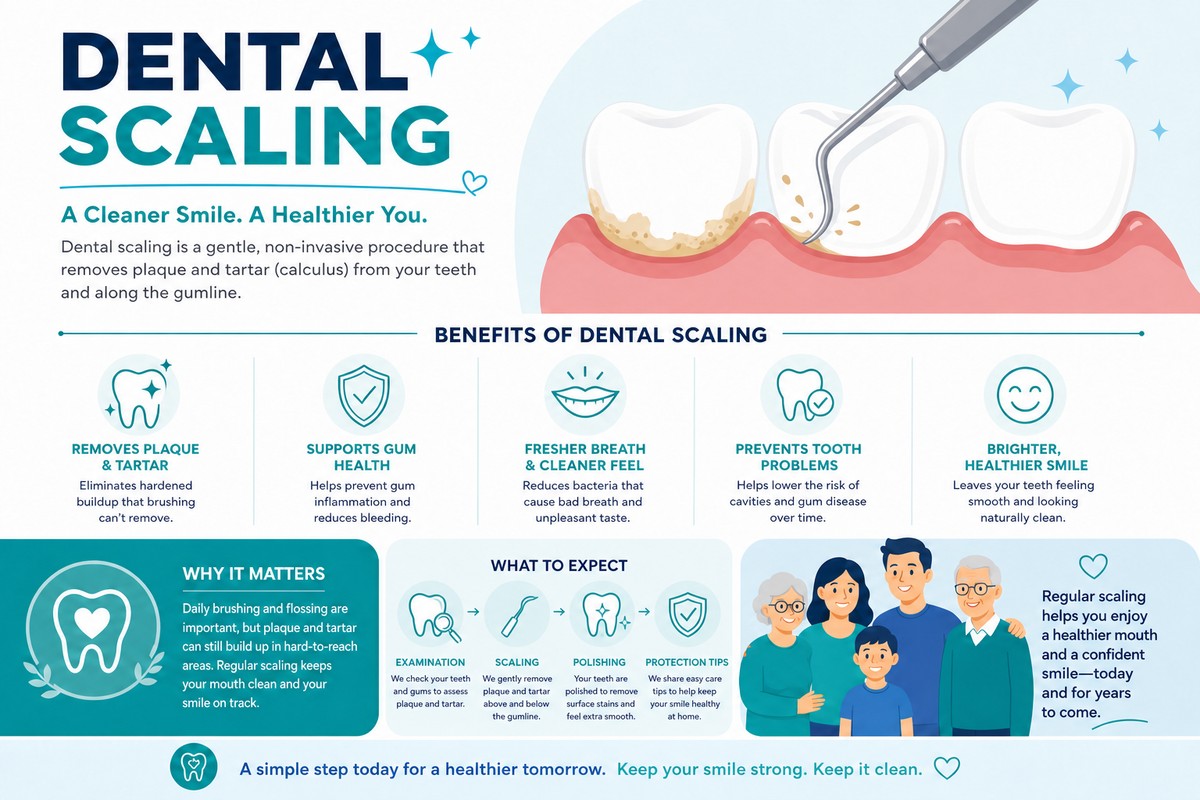
Dental scaling is a deep cleaning that clears hardened tartar from above and below your gum line, in the spots your toothbrush just can’t reach. It’s one of the key ways to get ahead of gum disease before it becomes a bigger problem.
Not sure where your gum health stands? A dental exam and cleaning is a great place to find out.
Scaling vs. Regular Teeth Cleaning
A regular cleaning covers the surfaces of your teeth above the gum line. It’s the preventive care you get every 6 months to stop plaque from hardening into tartar, which is something tougher to manage.
Scaling goes further. It targets tartar that’s already hardened at and below the gum line, in the little pockets your brush can’t get into.
If root planing is added, your hygienist also smooths out the tooth roots so bacteria have a harder time reattaching. Put those two together, and you’ve got what most people call a “deep cleaning.”
Signs You May Need Dental Scaling
Your mouth often gives you clues before things get worse. A few signs that scaling might be on the horizon include:
- Red, swollen, or bleeding gums, especially when you brush or floss
- Persistent bad breath that doesn’t go away after brushing
- Visible tartar buildup along the gum line or teeth that feel loose
Your dentist may also recommend scaling if it’s been longer than usual since your last visit. Tartar builds up over time, and the longer it sits, the deeper it settles.
What Happens During a Scaling Appointment
Knowing what to expect can make the whole thing feel much less intimidating. Here’s how a typical scaling appointment goes:
- Your hygienist checks pocket depth around each tooth to see where tartar has built up
- Your hygienist may use a local anaesthetic to numb the area so you stay comfortable
- Your hygienist removes tartar above and below the gum line using hand tools, an ultrasonic scaler, or both
- If you need root planing, your hygienist smooths the tooth roots to help keep bacteria from reattaching
Depending on how much buildup you have, your dentist may split the appointment across two visits, treating one side of your mouth at a time.
Why Scaling Matters
Gum disease doesn’t usually hurt in the early stages, which is part of what makes it easy to ignore. Scaling can help stop it from progressing to the point where tooth loss becomes a real concern.
It can also freshen your breath and calm down the puffiness and bleeding that come with inflamed gums. Gum disease starts with a bacterial infection from plaque buildup, so getting ahead of it early can help you avoid bigger problems down the road.
Is Scaling Painful?
If local anaesthetic is used, it helps manage discomfort during the procedure itself. Afterward, expect some sensitivity around your gums and teeth for a few days, especially to hot, cold, or sweet foods.
That usually settles on its own as your gums heal.
Keeping Your Gums Healthy After Scaling
Scaling does the heavy lifting, but what you do at home decides how long those results stick around. Try these habits:
- Brush twice a day and floss daily to keep tartar from building back up
- Book regular checkups so your dentist can spot new buildup early
- Ask your hygienist to walk you through the best at-home routine for your teeth
Your gum health doesn’t have to be complicated. With the right habits and some consistent care, you can keep things on track between visits.
Ready to Give Your Gums Some Attention?
Whether it’s been a while since your last visit or something just feels off, reaching out is a solid first step. Upper Gage Dental Centre has been helping families take care of their smiles since 1978, and the team is ready to help with yours too.
Book your appointment today and give your smile the care it deserves.