


Key Takeaways
- A cracked tooth can need urgent care if you have pain, swelling, bleeding, or a deep break.
- A small chip without pain may not need same-day care, but it still deserves a dental check.
- Warm water, soft foods, and saving any broken pieces can help before your visit.
- A dentist can check the crack and guide your next step.
A cracked tooth can happen during an ordinary meal. You bite down on a popcorn kernel, notice a sharp sting, or feel a rough edge with your tongue. Even a tiny crack can make cold water feel like a jolt.
A cracked tooth can be a dental emergency when you have severe pain, swelling, bleeding, or a crack that reaches deep into the tooth.
Cracked Tooth Emergency Signs
Your tooth has layers. The outside is hard, but the inside has nerves and blood vessels. When a crack reaches those inner parts, you may feel pain that comes and goes, or pain that hits the moment you bite.
Some signs mean you should seek care quickly. These symptoms can point to a deep crack, an injured nerve, or an infection near the tooth.
- Sharp pain when you bite.
- A swollen gum near the tooth.
- Bleeding that does not stop.
- Pain that lingers after hot or cold drinks.
- A loose piece of tooth or a rough edge that cuts your cheek or tongue.
If your face is swollen, you have severe pain, or the tooth hurts even when you are not chewing, prompt dental care can help protect the tooth and reduce discomfort.
How Long Can You Wait With a Cracked Tooth?
How long you can wait depends on the size of the crack and how your tooth feels. A small chip with no pain may not need urgent care the same day. Still, a dental exam can help check if the crack goes deeper than it looks.
If you have severe pain, contact the practice promptly to ask about same-day care. Pain when you chew can mean the crack shifts under pressure. Each bite can make the area more sore.
Deep cracks need fast care. A crack that runs toward the gum, exposes a darker inner layer, or leaves a piece loose can place the tooth at risk. Waiting can make treatment more complex.
If you are unsure, calling a dentist can help you decide how soon to come in based on your symptoms.
What to Do Before Your Dental Visit
The goal before your visit is to keep the area clean and avoid more pressure on the cracked tooth. Simple steps can help you stay more comfortable until the dental team checks it.
- Rinse your mouth with warm water.
- Save any broken tooth pieces in a clean container.
- Avoid hard, sticky, very hot, or very cold foods.
- Chew on the other side of your mouth.
- Use dental wax from a pharmacy if a sharp edge rubs your cheek.
Warm water can help clear food from the area. Soft foods like soup that is not too hot, yogurt, scrambled eggs, or mashed potatoes can be easier to manage.
Do not use the cracked tooth to test how bad it feels. Biting down again and again can add stress to the crack.
What a Dentist Can Do for a Cracked Tooth
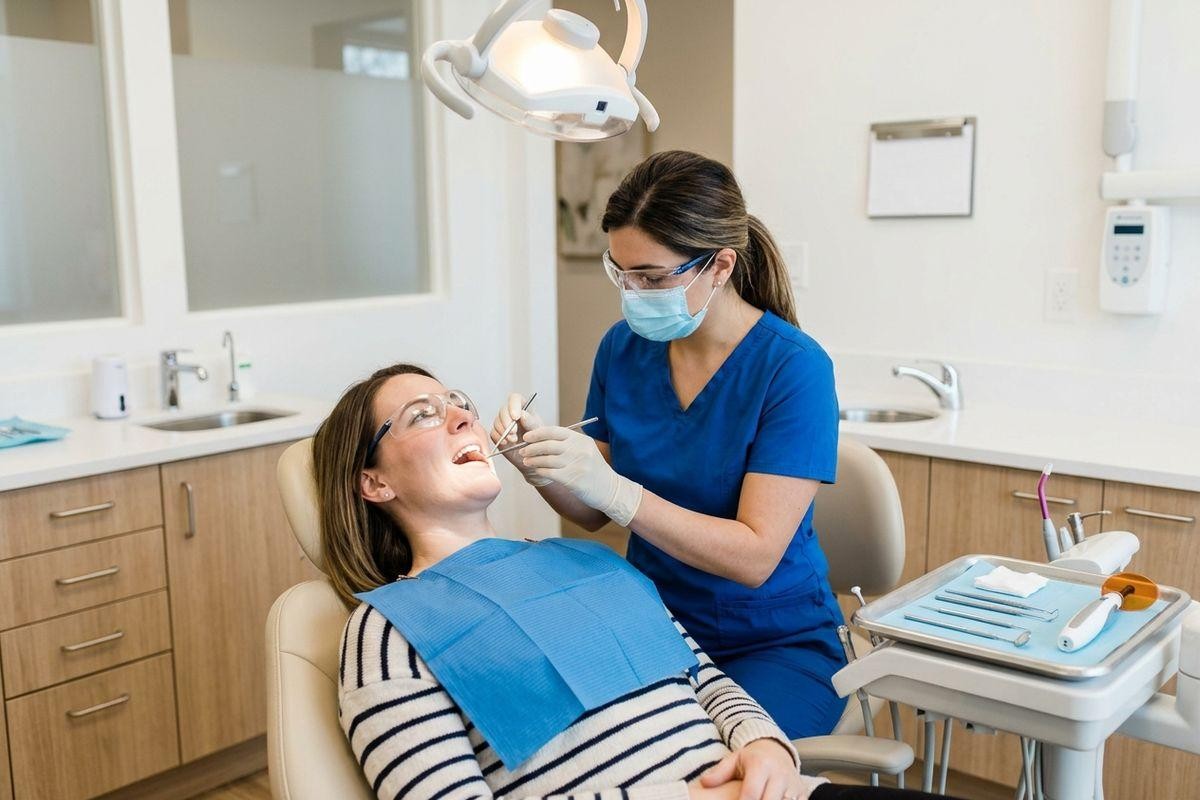
At the visit, the dentist checks the tooth, gum, and bite. The team may take an X-ray to look below the surface. The dentist may also gently test how the tooth reacts to pressure, cold, or touch.
Treatment depends on where the crack is and how deep it goes. A small chip may be smoothed or repaired with bonding. Bonding uses tooth-coloured material to cover the damaged area. A filling may help if the crack affects a small part of the chewing surface.
A crown may be used when the tooth needs more support. A crown covers the tooth like a cap and helps spread chewing force. If the crack has reached the nerve, a root canal may be needed before the tooth is restored with a crown.
- An exam helps check crack depth and tooth stability.
- Bonding or a filling may help with smaller cracks or chips.
- A crown may help support a tooth with a larger crack.
- A root canal may help when nerve pain is present.
The dentist can explain each option in clear steps, so you know what is happening before care starts.
When to Visit a Dentist or the ER for Tooth Pain
Tooth pain can feel intense, and it may be hard to know where to go. The ER can help with serious symptoms that affect your overall health or follow a serious injury. A dental office can help with the tooth itself, including cracks, chips, and pain when you chew.
When the ER May Help
Some symptoms need medical care right away, especially when swelling or injury affects more than the tooth.
- Face swelling or fever.
- Trouble breathing or swallowing.
- Injury with heavy bleeding.
- Swelling that spreads toward the eye, jaw, or neck.
The ER may help manage urgent symptoms. You may still need dental care after that to treat the cracked tooth.
When a Dentist Can Help
A dentist can help when the main issue is a cracked, chipped, or broken tooth. Dental care can also help when pain appears during meals, when cold drinks sting, or when a rough edge bothers your tongue.
- A cracked, chipped, or broken tooth.
- Pain when chewing food.
- A sensitive tooth after a crack.
- A loose filling or crown after a bite injury.
Upper Gage Dental Centre has served Hamilton families since 1978 with a warm, family-based approach. If your tooth cracks, the team can guide you with care, explain your options, and help you take the next step. Call our friendly office team to book a visit.