

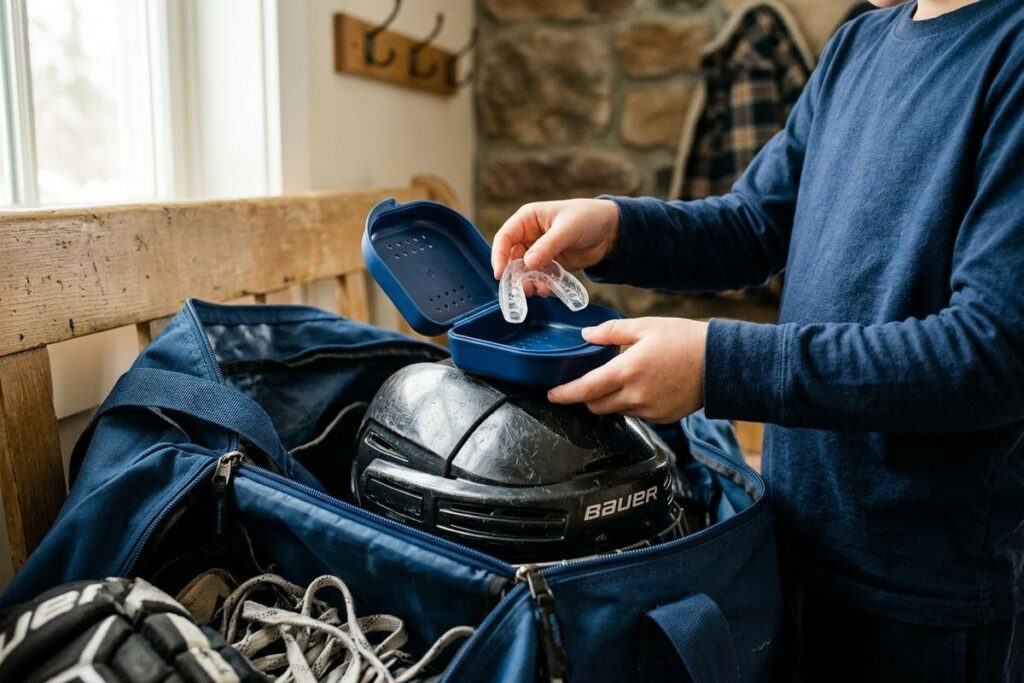
Key Takeaways
- A mouthguard shields teeth, lips, tongue, and cheeks during sports.
- Contact sports, ball and stick games, and wheeled activities all call for one.
- Kids between ages 7 and 11 face a higher risk of dental injury.
- Stock, boil and bite, and custom-fitted guards each fit and feel different.
- Kids with braces can use orthodontic guards that cushion brackets and gums.
- Rinse, brush, and store the guard, then replace it when the fit loosens.
Sports Season Brings More Than Just Bruises
Your child comes home from hockey practice with grass stains, a scraped knee, and a story about the puck that almost hit them in the face. Scrapes heal. A chipped front tooth doesn’t grow back.
If your child plays a sport where a ball, stick, elbow, or pavement could reach their mouth, a mouthguard is worth having. It’s a small piece of gear that fits in a gym bag, and it can save you a stressful phone call to Upper Gage Dental Centre, a dentist in Hamilton, on a Saturday afternoon when your child needs emergency dental care.
Why Mouthguards Matter for Young Athletes
A mouthguard sits between your child’s teeth and everything else moving fast on the field. It covers the teeth and helps shield the lips, tongue, and cheeks from a hit that lands the wrong way.
That cushion helps lower the risk of chipped or broken teeth, plus the cuts that come from teeth pressing into soft tissue. Fewer injuries also mean fewer urgent dental visits, so your evening stays a normal evening instead of a trip for emergency care.
Which Sports & Activities Call for a Mouthguard
Contact & Field Sports
These are the sports where contact is part of the game.
- Hockey, football, and rugby
- Soccer and basketball
- Boxing, wrestling, and martial arts
Ball, Stick & Wheel Activities
Flying balls, swinging sticks, and hard pavement all carry the same risk to your child’s smile.
- Baseball and softball
- Field hockey and lacrosse
- Biking, skateboarding, and rollerblading
- Skiing
When to Start
Once your child joins an organized team or climbs onto anything with wheels, a mouthguard belongs in their gear. Kids between ages 7 and 11 face a higher risk of dental injury, so that stretch of years is a good time to build the habit.
Types of Mouthguards & How They Compare
Stock Guards
Stock guards come ready to wear straight off the shelf, and they cost less than other options. The trade-off is fit. They tend to feel bulky and sit loosely, which can make your child fidget with it during the game.
Boil & Bite Guards
You soften this type in hot water, then have your child bite down so it moulds around their teeth. It’s a practical middle ground while baby teeth fall out and adult teeth move in.
Custom-Fitted Guards
A custom guard is made from an impression of your child’s mouth, so it hugs the teeth without extra bulk. That closer fit feels more comfortable, and your child can talk to teammates and breathe more easily while wearing it. The same approach goes into custom nightguards for kids who grind their teeth at night.
Mouthguards for Kids With Braces
Braces add hardware to the equation, and a stray elbow can knock a bracket loose. Orthodontic mouthguards are shaped to help protect brackets from impact. Families weighing orthodontic care for children often ask about sports protection early on.
They also cushion the gums and cheeks, which sit close to all that metal during a hit. Depending on your child’s treatment, the team may suggest a guard for both the upper and lower teeth. Teens using Invisalign clear aligners remove them for practice, so a mouthguard still has a place in the bag.
How to Care for & Replace a Mouthguard
Daily Cleaning & Storage
A quick routine keeps the guard fresh instead of funky.
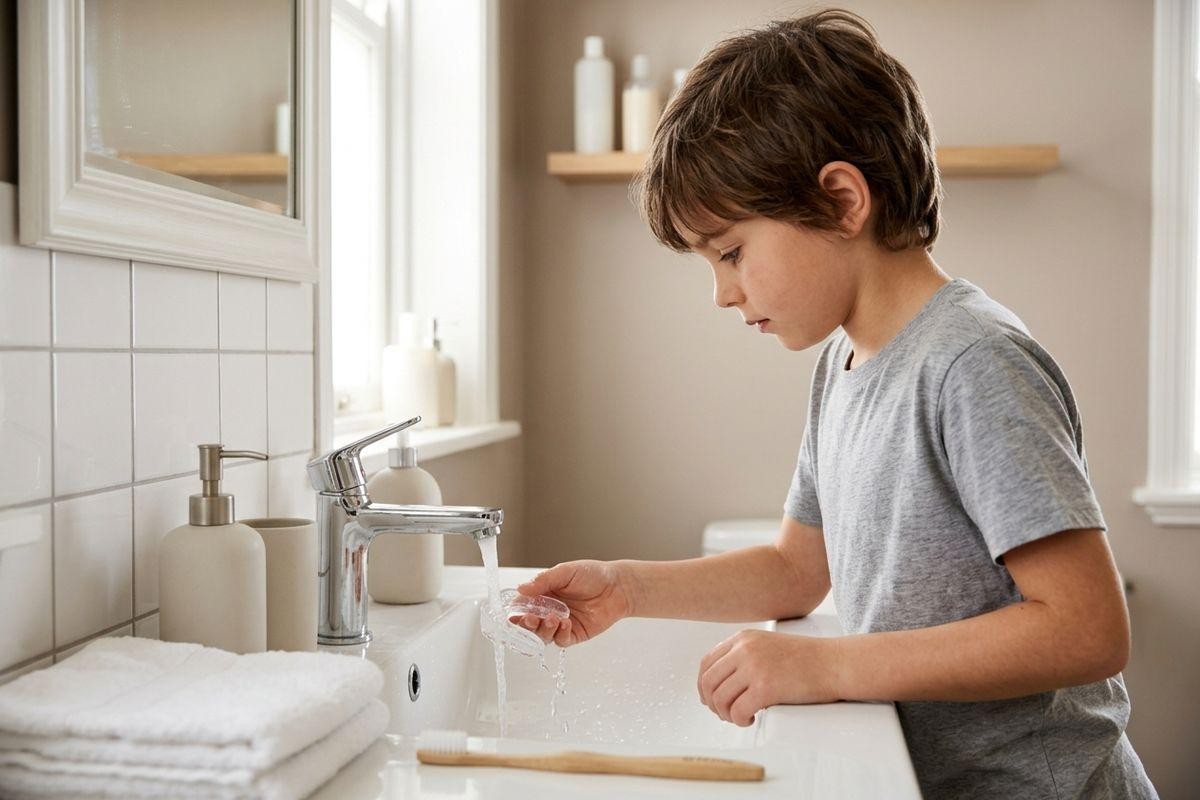
- Rinse it before and after every use.
- Brush it with cool water and mild soap.
- Store it in a sturdy case with vents so it can dry.
Signs It’s Time for a New One
Mouthguards don’t last forever, especially with a nervous chewer on the bench.
- Thin spots, tears, or chew marks along the edges
- A loose fit as new teeth come in
- Any complaint that it feels different than it used to
Bringing the guard along to checkups gives the team a chance to look at the fit while your child’s mouth keeps growing.
Gear Up for the Season Ahead
A mouthguard takes seconds to put in and can spare your child a cracked tooth and a long repair appointment. The team at Upper Gage Dental Centre can talk through which type suits your child’s sport, age, and braces, then check the fit as their smile changes.
Book a visit today and send your young athlete back out there with one more piece of protection.